I've got COVID! Paxlovid and the riddle of antiviral drugs

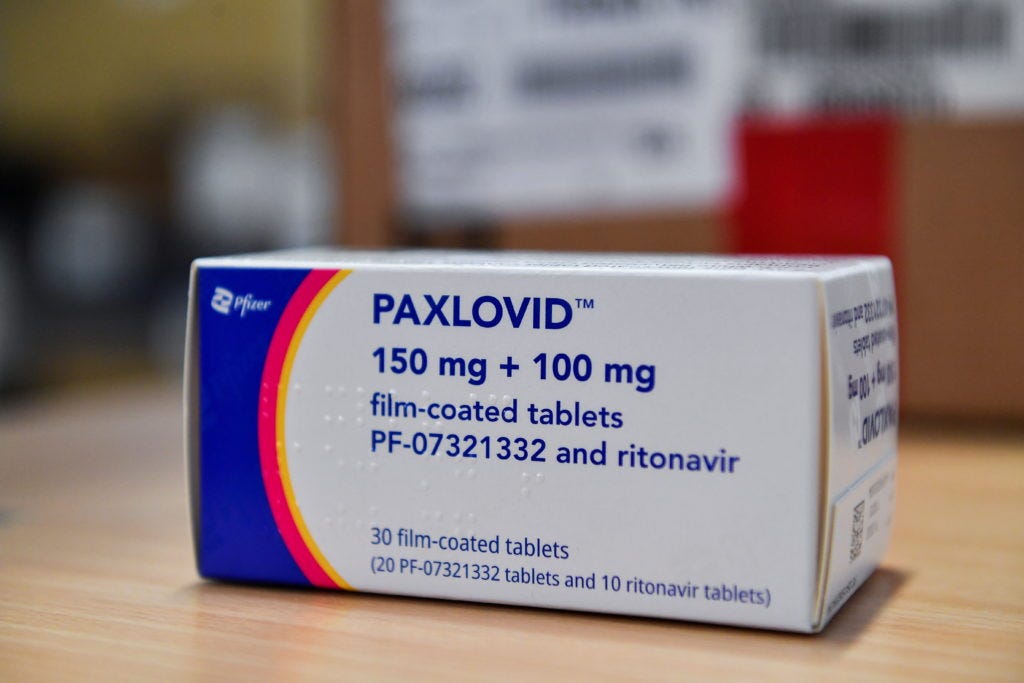
A bonus episode! A few weeks ago, Thomas finally got COVID, for the first time. He started taking Paxlovid, and that started a whole antiviral adventure.
So he took out his microphone and did a special episode on viruses, those poorly understood invisible monsters that may or may not even be alive. Today we explore the history of antiviral drugs - including the particularly vexing challenge of HIV.
We look at the frontiers of antiviral drug development, the mystery of Long COVID, and consider something called "rebound COVID" - when Paxlovid fails the fully kill off the virus.
And we consider the scary prospect of new emergent viral diseases - because some day, a new virus will arrive. How will we react? How will people and society and science respond? Will we mobilize together, the way we did, for a brief window there, in early 2020?
Or is the whole compact between science and society just too broken now? Is there too much distrust?
Sources:
[1] Emerging Infectious Diseases John Hopkins Medicine: Emerging infectious diseases like COVID-19 and HIV are new to humans or newly spreading, while reemerging diseases like malaria and tuberculosis are old threats returning, and increased global travel helps all of them spread.
[2] Remdesivir for the Treatment of Covid-19 — Final Report (2020) New England Journal of Medicine: In a large clinical trial of hospitalized adults, remdesivir cut median recovery time from COVID-19 from 15 days to 10, making it the first antiviral shown to help against the disease.
[3] Why remdesivir, a highly effective COVID treatment, is a last resort for providers (2022) NPR: Remdesivir works best when started early, but it requires IV infusions on several days in a row and costly upfront payments by clinics, so providers held it in reserve for when pills and antibodies were scarce.
[4] Meet the woman who gave the world antiviral drugs (2020) National Geographic: Chemist Gertrude Elion developed acyclovir in 1978, the first antiviral that stopped a virus without harming healthy cells, paving the way for treatments for HIV, hepatitis and COVID-19.
[5] Gertrude B. Elion, M.Sc. (video) Academy of Achievement: Gertrude Elion, who shared the 1988 Nobel Prize in Medicine with George Hitchings, reflects on her path into chemistry and the drug discoveries that defined her career.
[6] What Is an Antiviral? (2024) National Foundation for Infectious Diseases: Antivirals disrupt a virus’s ability to copy itself, which can shorten illness and lower the risk of severe disease, and some infections like flu can be cleared while chronic ones like HIV and herpes can only be kept in check.
[7] Antivirals: Past, Present and Future (2019) Recent Advances in Animal Virology: Viruses hijack the body’s own cells to reproduce, so antivirals that attack them risk harming the host too, which has made them harder to develop than antibiotics since the first drugs like acyclovir.
[8] Strategies and efforts in circumventing the emergence of antiviral resistance against conventional antivirals (2025) npj Antimicrobials and Resistance: Viruses evolve quickly enough to become resistant to the drugs used against them, and during the COVID-19 pandemic viral evolution outpaced the development of new antivirals.
[9] Introduction: A Short History of Virology (2014) Viruses and Man: A History of Interactions: For centuries, epidemics were blamed on bad air and imbalanced humors, until Pasteur and Koch’s germ theory and later research showed viruses to be distinct from bacteria.
[10] Antiviral agents: A journey through time to discover new uses and advancements (2026) Letters in Drug Design & Discovery: Several new antiviral drugs have been approved since 2018, but most still work against only a few viruses, can cause harmful side effects, and stop working as viruses learn to resist them.
[11] Antiviral drugs: history and obstacles (2016) Virology: Many early antiviral drugs were discovered by accident, including acyclovir for herpes in 1977. In 1985, AZT became the first drug shown to stop HIV from copying itself.
[12] AIDS Cocktail Boosts Immune System (1998) Science: Adding a newer class of drugs called protease inhibitors to the AIDS drug “cocktail” helped patients’ immune systems recover, even when the virus was still in their blood.
[13] The end of AIDS: HIV infection as a chronic disease (2013) The Lancet: Antiretroviral therapy has turned HIV from a death sentence into a chronic condition with near-normal life expectancy, though the virus still can’t be cured and long-term health problems remain.
[14] Antiviral drug discovery and development: challenges and future directions (2026) Signal Transduction and Targeted Therapy: Developing new antivirals is still slow and costly, and researchers are turning to new strategies to prepare for future outbreaks.
[15] Study suggests Covid rebound is far more common with Paxlovid than without (2023) STAT: In a small study, about 21% of people who took Paxlovid saw their virus levels rise again after recovering, compared with under 2% of those who didn’t, though the drug still prevents hospitalization.
[16] How long Covid’s scientific stalemate made it politically erasable (2026) STAT: Long COVID has no lab test, and researchers still don’t agree on what causes it or how to treat it. Federal funding for long COVID research has been cut, and several advisory groups working on it have been shut down.
See Privacy Policy at https://art19.com/privacy and California Privacy Notice at https://art19.com/privacy#do-not-sell-my-info.
Discussion about this episode