


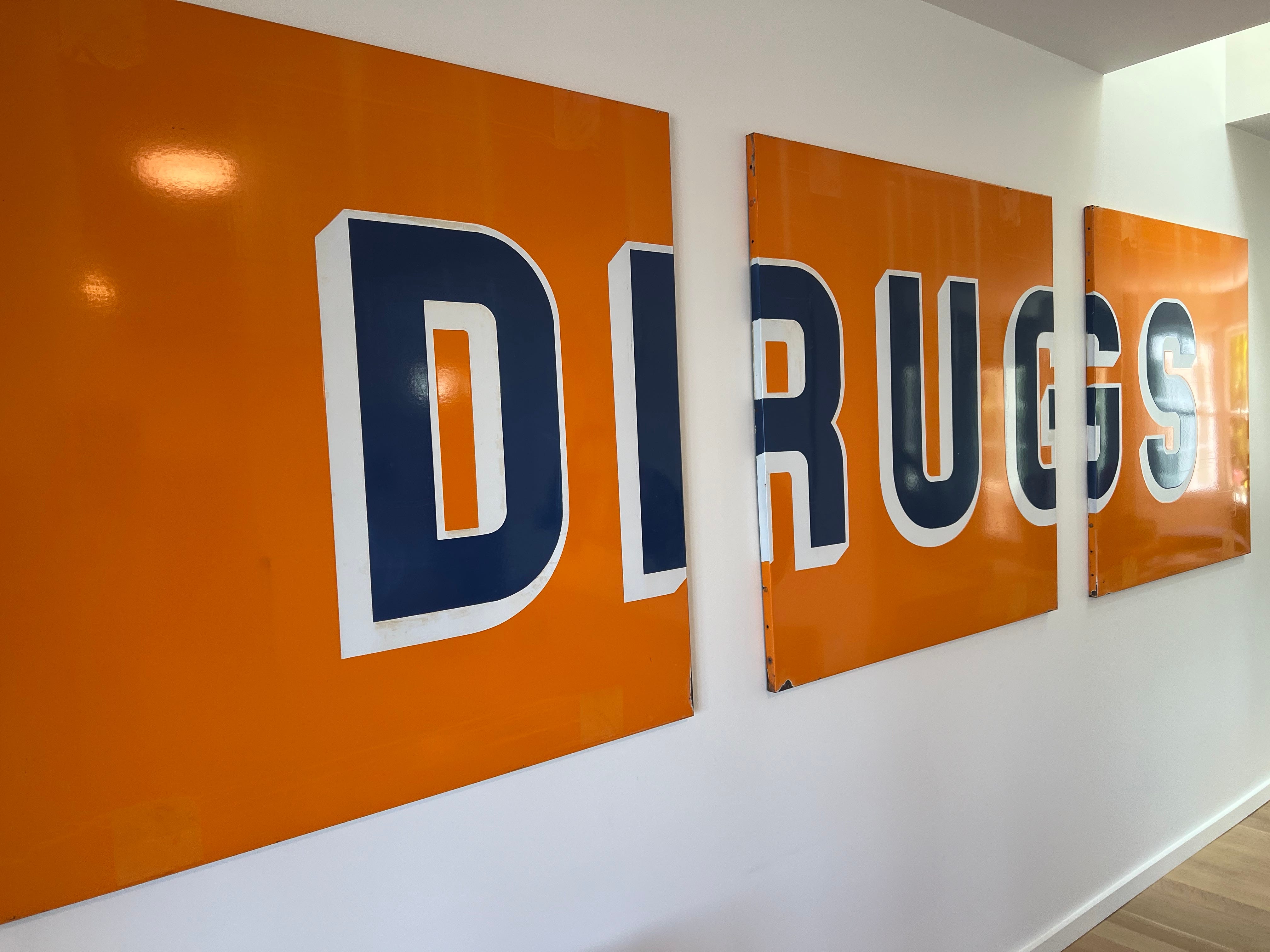
A few days ago, I gave a talk at the public library in Belvedere, California. It was a Tuesday evening, and the audience of 50 or so were mostly older folks - over 60-ish - with a smattering of younger adults. They were there to hear stories about drugs - and to talk about the drugs they take. Because they had questions. And concerns.
Were they on the right medicine?
Why wasn’t their medicine working?
Was there something else they should be trying?
Off the bat, I made clear that I am not a doctor, nor a pharmacist. I can’t offer advice, or guidance. But I can offer perspective, and context. So I shared a few things that I have learned about drugs - meaning prescription drugs - over the course of creating Drug Story.
Here’s my Top Three:
We want magic bullets. What we get is more messy.
Most people have outsized expectations for the drugs they take. We want this new prescription to answer our prayers, to solve our problem. But reality is much more complicated: trial and error. Side effects. Tolerance. So many drugs - from antidepressants to GLP-1s to statins - create all sorts of consequences that many patients must muddle their way through. This is a constant concern.Some drugs arrive in search of a disease.
Pharmaceutical companies are incentivized to pursue profits - that incentive has created effective treatments for diseases that harm a great many people (heart disease, cancer treatments, HIV/AIDS, infectious diseases, etc). But sometimes chemicals affect the human body in ways that aren’t considered “treatments” for a “disease” - until there’s a new definition of a disease. Obesity. Insomnia. Anxiety. Low T. Male pattern baldness. It’s good to know when sometime new is happening, and when a game is being played.Some drugs treat symptoms for much bigger problems.
In diseases from diabetes to high cholesterol to respiratory diseases to mental health, drugs have save millions of lives. Yet there’s a difference between treating a disease and curing it - when I would define “cure” as tackling the root cause, and eliminating it. Many modern diseases are the inevitable result of the world we live in: our food, our entertainment, our communities. Drugs can do good. But if we want to solve big problems, we need to think bigger than drugs.
As I write now it is another Tuesday evening - the first Tuesday of the year that I have not dropped an episode of Drug Story.
Three months ago, back on Jan. 6, Drug Story had exactly 144 followers/listeners. I had little reason to expect that there would be much more of an audience than that. The whole idea of the podcast seemed very niche, as they say: one episode about one drug (but mostly about a disease). Who’d find that compelling?
I’m thrilled to say, plenty of people. A lot of people. Like a whole lot. Like 10X what I’d hoped for. (And I was greedy!)
Thanks to the help from a few generous friends with large audiences (thanks to Tim Ferriss and David Eagleman and Tim Harford), the show got a push out of the gate. And thanks also to the strange gods within Apple Podcasts, who deemed Drug Story worthy of featuring repeatedly: first as a New Show, then as a Featured Show, and ultimately as a Top Show.
Zoom! Tens of thousands of people now listen to every episode, every week. This idea - one drug, one disease, one episode - turns out to be a perfect way to tell larger stories about society and history and economics and medicine. About the world we live in, and how it got that way. These are amazing stories, and I am having a blast in telling them.
So if you haven’t heard: We are doing a Season 2 (and hopefully many more!). We have the same amazing team - helmed by the brilliant Rachel Swaby - and we are going to try to do TWICE the number of Drug Stories in this next batch. Adderall and ADHD. Insulin and diabetes. Humira and autoimmune disorders. Synthroid and thyroid conditions. And a whole mini-series on food supplements (iodine in salt, anyone?) that will make your head spin and your brain explode…at the same time!
Which brings me to three wishes:
Help us hit 1,000 reviews! Rate the show on Apple or Spotify
In this age of algorithms, human inputs still matter so much! If you like what we are doing, please take 90 seconds and click through and write a review. Here’s a link to the show on Apple; here’s a Spotify link.Spread the word! Send your friends a link with a thumbs-up emoji
You may have binged Drug Story, but your besties have not. Spread your cred and turn them on to one of the top rated shows on Apple Podcasts! If we can get more listeners and followers while we make more episodes, we can all set Season Two up for success.Support us! Subscribe or sponsor the show
Drug Story is an independent effort - meaning nobody is paying our bills. So it really helps when people chip in to support the show here. Or even better: if you are part of a company that may be a worthy sponsor for Drug Story, send me a note at thomas@drugstory.co . We have a couple slots left, and it’s a really good deal to reach a really amazing audience.
The plan is to get Season Two live before end of 2026 - which will be an effort. Between now and then, I promise to drop monthly updates (at least!) on statin guidelines or Drug Story backstories or whatever else we come up with.
Thank you for being part of Drug Story - and for sticking with us in the weeks ahead.
.
I'm a pharmacy student from Canada and I really enjoyed your podcast! You should really consider having a pharmacist on your show next season, as they would have a lot of insight on on how medications are used pharmacologically and how they impact the patients who pick them up in terms of cost, stigma, or quality of life.